Imagine you're a buyer new to Dallas. You open ChatGPT, type 'Who's the best real estate agent in my area?' and within seconds you have one name.
Not a list of 200 agents, not a directory. One trusted recommendation.
Now ask yourself: will that name be yours?
A 2025 Realtor.com study found that 82% of Americans already use AI for housing information. That's not a trend on the horizon. That's the reality happening right now, in your market, with your potential clients.
The rules of online visibility have fundamentally shifted. Google is no longer just a search engine, it's an answer engine. ChatGPT, Perplexity, and Google's AI Overviews are now acting as digital referral machines, recommending one to five trusted sources per query. If your digital presence isn't built for this new world, you won't just rank lower. You won't show up at all.
In this Free Halo Live Webinar, Nick Krem, CEO and co-founder of the Krem Institute of Artificial Intelligence breaks down the exact five strategies real estate agents are using right now to get recommended by AI and how you can build your own system to dominate AI search in your local market. Let's dive into it!
"82% of Americans used AI for housing information in2025." — Realtor.com
Here's a number that should stop you in your tracks: 5.8 billion people visit ChatGPT every single month.
That's your buyers, your sellers, and your next client.
But here's the difference between traditional search and AI search: Google returns pages. AI returns recommendations.
So, when someone Googles 'best real estate agent in Phoenix,' they get a list.
When they ask ChatGPT the same question, they get one to five names presented with the confidence of a trusted friend.
AI recommendations work a lot like referrals. People tend to trust what AI tells them, especially when it gives a clear answer. So when ChatGPT mentions your name, a potential client may think, “If it recommended this agent, they’re probably worth talking to.”
This isn't theory. Here are real results from agents in our program who got clients through AI search:
• Deborah Vance: $5.3 million in business from ChatGPT, including three high-end buyers in Imperial Beach, California
• Kathy Courtney: $8.5 million in business, her best year yet, using AI
• Jessica Ford: $3.2 million in closed deals, including clients she never met in person
These are not just lucky exceptions. These are agents who understood early that people are starting to use AI to find agents, and they made sure their online presence was strong enough to get found.
According to projections, 48% of buyers will use AI tools specifically for their home search by 2026. The window to establish yourself as a recommended agent is open right now but it won't stay open forever.
-w960.webp)
AI is emotionless. It doesn't recommend agents because it likes them or because someone had a good conversation with it once. It follows an algorithm. And one of the most powerful signals in that algorithm is reviews.
Think of reviews as AI's way of asking the crowd: 'Can I trust this person?'
The more positive, consistent reviews you have across authoritative platforms, the more AI systems will flag you as a credible, trustworthy source in your market.
• Google Business Profile — the single most important review platform for local AI visibility
• Zillow — a high-authority real estate domain AI regularly references
• Realtor.com — another trusted industry source in AI training data
• Facebook — still relevant for social proof signals
The goal is to generate a review in every closing. Build a repeatable system like a follow-up email sequence, a QR code at the closing table, a personal text, so that your clients leave reviews consistently and automatically.
According to Myles Anderson, Co-founder and CEO at BrightLocal, 97% of consumers still read online reviews before making a purchase decision, and businesses with more reviews often rank better in local search. The same idea applies to AI search visibility.
NAP simply stands for Name, Address, and Phone Number. It's one of the most overlooked factors in local AI visibility and one of the most impactful.
AI systems cross-reference your information across the web to determine who you are and whether you're trustworthy.
If your name appears as 'Nick Taylor' on Google, 'N. TaylorRealty' on Zillow, and 'Nicholas Taylor' on an old brokerage website, those inconsistencies create confusion and confusion erodes your credibility score.
Here's a simple audit process:
• Google your full name and business name
• Note every platform, directory, and website where you appear
• Check that your name, phone number, email, brokerage, and address are identical everywhere
• Claim and correct any outdated listings, especially from previous brokerages
• Complete your Google Business Profile fully: photos, hours, service areas, FAQs
This is foundational work. It won't feel exciting but it sends a powerful consistency signal to every AI system crawling the web.
Answer Engine Optimization (AEO) is the practice of structuring your content to directly answer the specific questions your clients are asking in a format AI can easily extract and present as a recommendation.
Traditional SEO gets you on the first page of Google. AEO gets you cited by ChatGPT, featured in Google AI Overviews, and read aloud by voice assistants. They work together, SEO is the foundation, AEO is the evolution.
The key difference traditional SEO focuses on keywords and rankings. AEO focuses on questions and answers. AI doesn't want to work harder than it has to. It's looking for: What's the question? What's the answer? Give it that, clearly and directly, and it will reward you with citations and recommendations.
One of the most useful tools real estate agents can use right now is ChatGPT Tasks, because it can automate weekly market research for you. To make it easy, we put together a document with ready-to-use prompts that help you create a task for every Monday at 8:00 AM
Once you set it up, ChatGPT can send you a weekly report with the top questions buyers and sellers are asking in your market, along with suggested answers, local keywords, and source links.
That means instead of spending hours figuring out what to post, you already have fresh content ideas delivered to you every week.
• Specify your city or neighborhood so the research is hyper-local
• Require sources published within the last 45 days to ensure freshness
• Prioritize local MLS data, municipal records, local news, and verified market reports
• Demand every data point include a publication date and a clickable source link
Important: Always require clickable source links in your ChatGPT prompts. Without them, AI may fabricate statistics or citations to appear helpful. Source links keep the data accountable.
Once you receive your Monday report, you have multiple content angles ready to go:
• Turn a top question into a blog post using this AEO/SEO-optimized blog writing tool.
• Create a video script with ChatGPT. Sample prompt: 'Act as an expert video script writer and draft a 3-minute script based on this question andanswer'
• Build social media posts targeting the same search intent
• Add the Q&A to your Google Business Profile's FAQ section
Every piece of content you create should follow this simple framework:
• Use the exact question as your title or headline (e.g., 'Is Now a Good Time to Buy a Home in Dallas Fort Worth?')
• Answer the question clearly and directly in the first paragraph with no buildup and no fluff.
• Support your answer with local data, recent market stats, and source links
• Use bullet points and numbered lists to structure supporting information
• End with a clear Call-To-Action
HubSpot’s 2024 State of Marketing report reinforces the same idea: content performs better when it is clear, useful, and built around what people are already searching for. That is why structured content that directly answers a question often works better than generic content.
Social media activity doesn't directly control what ChatGPT says about you but it contributes to what's called your digital density. The more consistently your name, expertise, and location appear across the web, the more AI systems recognize you as an established authority in your market.
Think of it like this. Every post, comment, story, and update is a small data point. Individually, each one is minor. Collectively, they form a picture and AI reads that picture.
The content strategy here mirrors your blogging approach: take the top questions from your Monday ChatGPT report and turn them into social content. Don't just copy and paste. Adapt the format for each platform.
• Answer a common buyer or seller question in a short video or carousel post
• Share recent market data with a clear, plain-English explanation
• Post fresh photos inside your Google Business Profile —AI reads this as active presence
• Update your Google Business Profile FAQs monthly withnew questions and answers
• Engage with local community content to strengthen your geographic authority
The platform doesn't matter as much as the consistency. Whether it's Instagram, Facebook, LinkedIn, or TikTok, showing up regularly with relevant, locally-focused content reinforces your authority signals across the internet.
YouTube is owned by Google. This single fact makes it one of the most powerful platforms for AI search visibility because every video you post has two chances to appear. Once on YouTube and once on Google.
About 30% of Google searches end on Google-owned properties including YouTube. When someone searches for real estate advice in your area, a well-optimized YouTube video can appear in both the standard search results and Google's AI Overview, doubling your presence in a single piece of content.
This is not about going viral or chasing subscribers. It's about building a searchable library of videos that answer the exact questions your market is asking.
Your Monday ChatGPT report gives you the roadmap. Each of the top 10 questions is a potential video. Record a concise, authoritative answer, optimize the title and description for the exact search phrase, and publish consistently.
For agents who do not like being on camera, tools like HeyGen can create an AI version of you that looks and sounds like you. It can then deliver your scripts and videos for you.
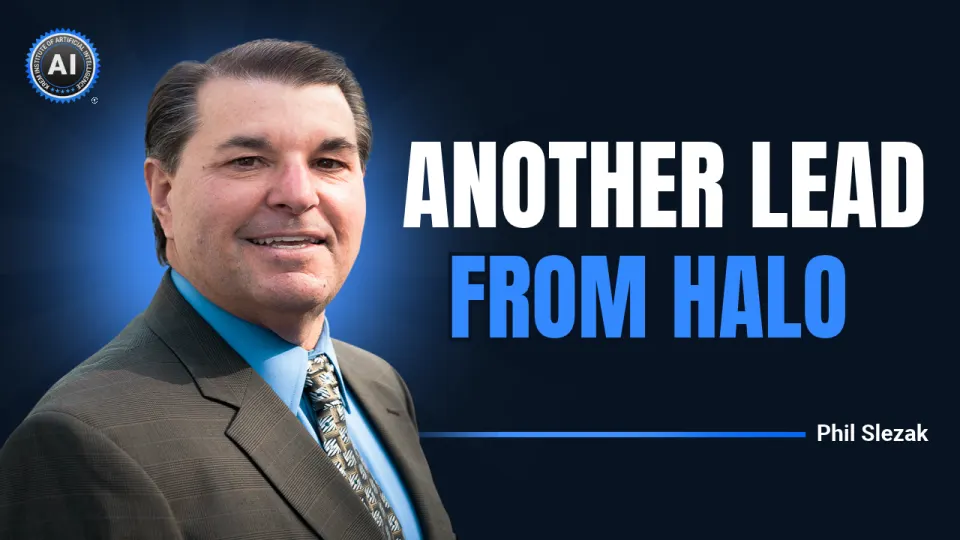
Phil Slezak, one of the agents inside our program has built a YouTube channel of over 3,700 subscribers, with every single video produced using an AI avatar. The audience doesn't notice the difference but they notice the value of the content.
Check out Phil's YouTube channel here.
This helps solve one of the biggest problems many agents have, being uncomfortable on camera. Whether you use an AI avatar or record the videos yourself, the goal is to keep creating helpful local video content that people and AI can find.
Here is one of the most important principles in AI search optimization: the more the internet talks about you, the more AI will trust you.
AI systems don't just look at your own website and profiles. They crawl the entire web for references to your name, your expertise, and your market. Every external mention, every backlink, every feature, and every directory listing is a vote of confidence in your authority.
This is what's known as external authority building, and it's the digital equivalent of getting quoted in a news paper or featured on a popular podcast.
A backlink is simply a link from another website to your website. For a real estate agent, that could be a local news article, community website, brokerage page, or podcast page sending people back to your site. Think of it like another business giving you a public recommendation, which helps search engines and AI see you as more trusted in your market.
• Get featured on local news websites. Even a single mention from a local news outlet carries significant authority weight
• Apply for 'top producer' or 'best of' lists in your area. Being included in ranking articles builds citation signals
• Appear on real estate podcasts, local business podcasts, or community-focused shows
• Contribute guest articles to real estate publications, community blogs, or local business sites
• Get listed in Real Producers magazine and similar industry publications that publish digital articles
• Join local business associations and chambers of commerce, they often publish member profiles online
A lot of agents ignore these chances because they seem small or not that important. But that is the wrong way to look at it. Every time another website mentions your name, links to your site, or talks about what you know, it helps AI see you as someone people can trust in your market.
A 2023 Moz.com study on local SEO found that external citation signals remain one of the top three ranking factors for local search. In AI-driven search, this principle is amplified because AI systems are trained on the collective knowledge of the web.
These five strategies do not work on their own. They work best when they all support each other.
Your reviews show that people trust you. Your content shows what you know. Your social media shows that you are active. Your YouTube videos show that you keep sharing helpful local information. And when other websites mention you, it shows that people outside your business know who you are too.
When all of this starts showing up online together, it gives AI more reasons to trust you and recommend your name when someone asks for an agent in your area.
1. Reviews & Citations — Build your Google, Zillow, and Realtor.com profiles with consistent NAP data
2. AEO-Friendly Content — Weekly blog posts and guides that directly answer your market's top questions
3. Social Media Consistency — Regular, question-driven posts that reinforce your local authority
4. YouTube Library — A growing archive of video answers indexed by both Google and YouTube
5. External Authority — Media features, podcast appearances, and directory listings that signal credibility
Right now, someone in your market is asking ChatGPT who the best agent is.
And AI is giving them an answer.
The question is, is your name part of that answer?
Ready to make sure it is?
Join our Free Halo Live Webinar every Tuesday at 12 PM ET. Hosted by Nick Krem, CEO and Co-Founder of the Krem Institute of Artificial Intelligence, learn how to position yourself to get found and recommended by AI.
👉 Join the Free Halo Live Webinar
Q1: How do I get my real estate business to show up in ChatGPT results?
To appear in ChatGPT results you need to build a consistent and authoritative presence across the web. This means generating reviews on Google, Zillow, and Realtor.com after every closing, publishing blog content that directly answers buyer and seller questions, keeping your name and contact information identical across all platforms, and earning mentions from local news sites, podcasts, and industry directories. ChatGPT recommends agents based on the volume and consistency of these trust signals, not paid ads.
Q2: What is AEO and why do real estate agents need it?
AEO stands for Answer Engine Optimization. It is the practice of structuring your content so AI systems like ChatGPT, Google AI Overviews, and voice assistants can extract and present your answers directly to users. Traditional SEO gets you ranked on Google search pages. AEO gets you cited and recommended by AI. For real estate agents this means writing blog posts in a clear question and answer format, using the exact phrases buyers and sellers type into AI tools, and keeping answers concise, sourced, and locally specific.
Q3: How many real estate agents does ChatGPT recommend for a single search query?
ChatGPT typically recommends one to five agents per query, not a long directory list. This makes AI search fundamentally different from Google, where dozens of results appear at once. When a buyer asks who the best real estate agent in their city is, they receive a small curated set of names presented with high confidence. Agents who build their digital authority early are far more likely to consistently appear in those recommendations.
Q4: Does Google My Business (Google Business Profile) help real estate agents rank in AI search?
Yes, your Google Business Profile is one of the most important assets for AI search visibility. AI systems cross-reference Google Business data when evaluating local authority. A complete profile with consistent contact information, recent photos, updated FAQs, and a strong volume of reviews signals credibility to AI algorithms. Claiming, completing, and regularly updating your profile is one of the highest-impact actions a real estate agent can take for AI search optimization.
Q5: How long does it take for a real estate agent to start getting leads from ChatGPT?
Agents who implement digital density strategies consistently typically begin seeing AI-driven inquiries within three to six months. The process is cumulative and each review, blog post, video, and external citation adds to your authority over time. Some agents have reported significant results including millions in closed volume within their first year of focused AI search optimization. The most important factor is starting before competitors in your market establish dominance.
-w960.webp)
-w960.webp)
-w960.webp)

-w960.webp)

-w960.webp)