
Are you still marketing your listings the old way? Relying on yard signs, postcards, and hoping someone walks into your open house?
The game has changed. According to NAR’s 2025 Home Buyers and Sellers Generational Trends Report, 43% of buyers said their first step in the home-buying process was looking online for properties for sale, compared with 21% who contacted a real estate agent first.
If you want to stay competitive, you need to show up where buyers are already looking.
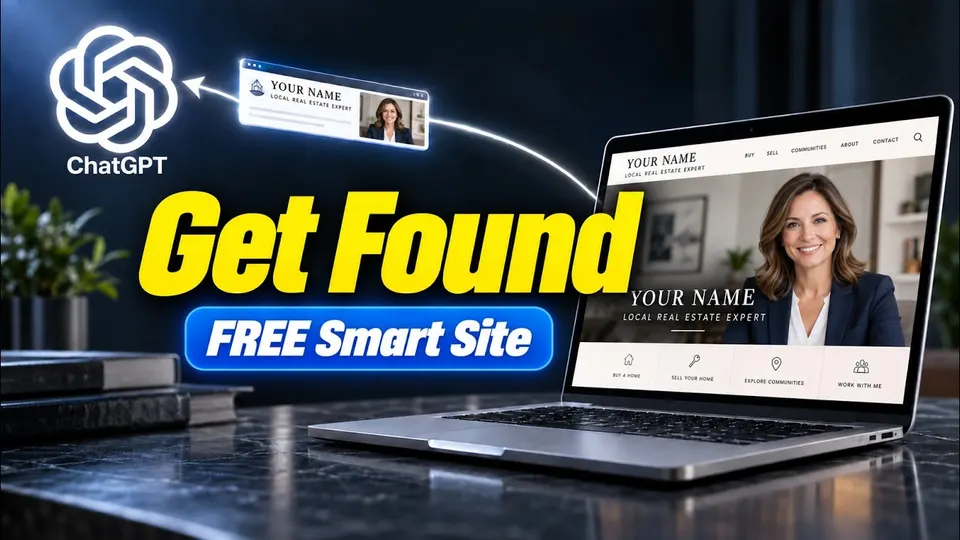
And today, search isn't just happening on Google. It’s happening on ChatGPT, YouTube, and AI tools that answer questions for buyers in seconds. That's why visibility matters more than ever.
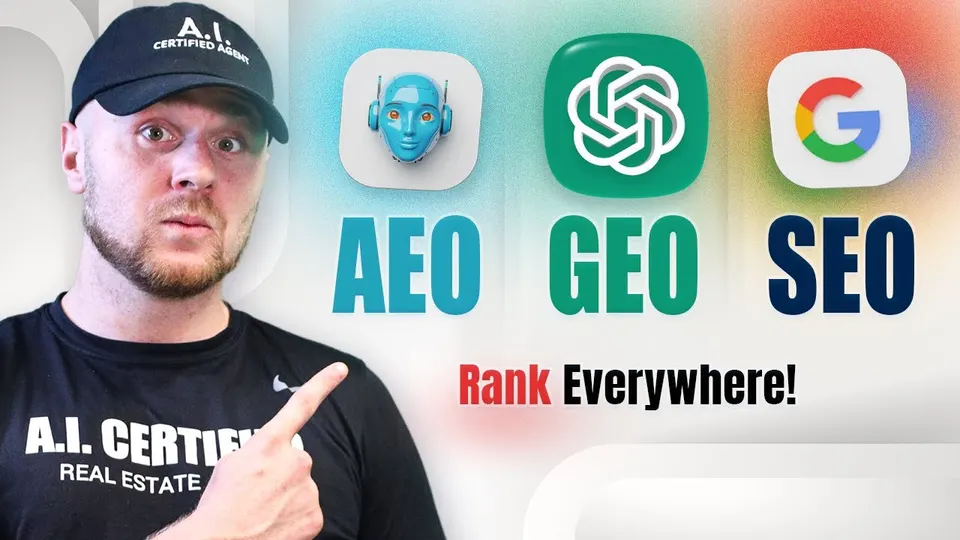
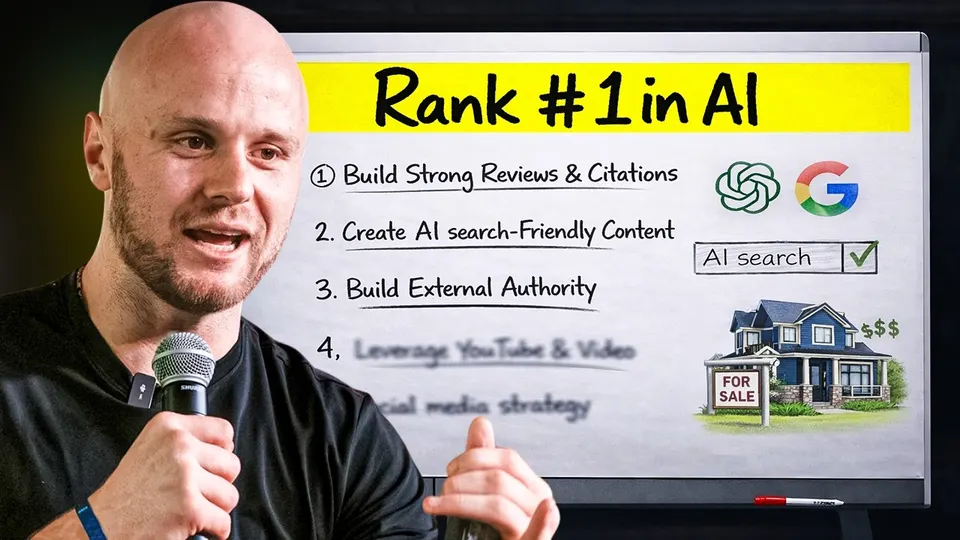
In this Live AI Training, we’ll walk through a simple strategy to help you show up across all platforms using what Nick Krem calls the Triple Engine Optimization Strategy.
You’ll learn how to:
Let’s break it down step by step so you can stop guessing and start getting discovered.
Let’s clear something up, there’s been a lot of buzz about AI making traditional SEO irrelevant.
That’s not true.
AI isn’t replacing SEO. It’s changing how SEO works.
Nick puts it simply:
“Google can’t recommend what it can’t find. And if Google can’t find you, neither can ChatGPT.”
To get found in today’s AI-first world, you need to optimize for all three engines:
If you’re not visible in all three layers, you’re invisible to modern search.
Let’s start with the basics. What is SEO?
SEO (Search Engine Optimization) is how your website or blog shows up on Google when someone types in a question. It's the digital version of placing your billboard where everyone can see it. If you're not on the first page of search results, most people won't find you.
This is where most agents stop—or guess. But Nick makes it simple:
And always make sure your site mentions your name, brokerage, and city. That builds trust for both humans and search engines alike.
Why does this matter so much?
Because the majority of user clicks go to the top results on Google, 27.6% to the first result alone. That makes ranking on the first page not just beneficial, but essential for driving meaningful traffic.
So while AI is transforming how search works, Google is still the front door. And if you’re not showing up there, AI tools won’t find you either.
Let’s break this down for the non-techy agents:
AEO (Answer Engine Optimization) is how you get your answer featured directly in voice search, AI assistants like ChatGPT, and Google’s instant answers. Unlike traditional SEO, which aims to help your website rank high on Google, AEO helps your content become the actual answer AI tools quote back to users. Think of it like jumping the line—you’re not just showing up in search results, you’re getting picked as the expert.
And this matters more than ever:
👉 25% of new Surfer SEO customers now come directly from AI assistants.
👉 Ahrefs reports a similar trend: AI Search brought only 0.5% of traffic but delivered 12.1% of all new signups. That’s a 23x higher conversion rate than regular search.
So how do you win at AEO? Simple. Start with a question.
For example:
Title: What are the property taxes in Medina for 2025?
Answer: In 2025, property taxes in Medina are expected to remain at levels consistent with the county's assessed value rates.
This structure increases your chances of being selected for voice search, featured snippets, and AI-generated answers. It makes your content easy to understand, fast to reference, and ready to be picked up by search and AI tools alike.
-w960.webp)
Once your content is clear, consistent, and searchable, the next level is making it AI-friendly.
GEO (Generative Engine Optimization) is how you get recommended by tools like ChatGPT or Google’s AI Overview. These tools don’t just pull the top search result—they extract content they view as clear, structured, and credible.
That’s not just theory, experts have tested it. In a LinkedIn post, Chris Long, VP of Marketing at Go Fish Digital, stated that AI platforms prefer content with a structured layout. His team found that bullet points, heading structure, and list-style formatting significantly increased the chances of being featured in AI-generated results.
Here’s how to show up in those results:
When ChatGPT pulls content, it wants to trust the source and understand it fast. Your website becomes your digital resume.
By now you understand what to write. But how do you actually create a blog that ranks fast?
Here’s a more detailed breakdown of how to follow the full 5-step workflow using the Triple Engine Optimized Blog Writer GPT:
Start with AnswerThePublic or AlsoAsked to discover what buyers and sellers are actually searching for in your market. Look for long-tail, hyperlocal questions like "What are the property taxes in Medina for 2025?"
Use that exact question as your blog title. Then, in the first 40–60 words of your blog, provide a clear, direct answer. This makes it easier for AI to pick up your content as the featured answer.
Inside the GPT, you’ll be asked to fill out these prompts:
ChatGPT will build you a full blog blueprint, including:
Once your setup is done, click generate. The GPT will write your full blog post, optimized and structured to support SEO, AEO, and GEO, complete with intro, bullets, FAQs, and clear formatting.
Canvas Mode will automatically activate. This lets you:
Once you're happy, just copy, paste, and publish the blog to your website.
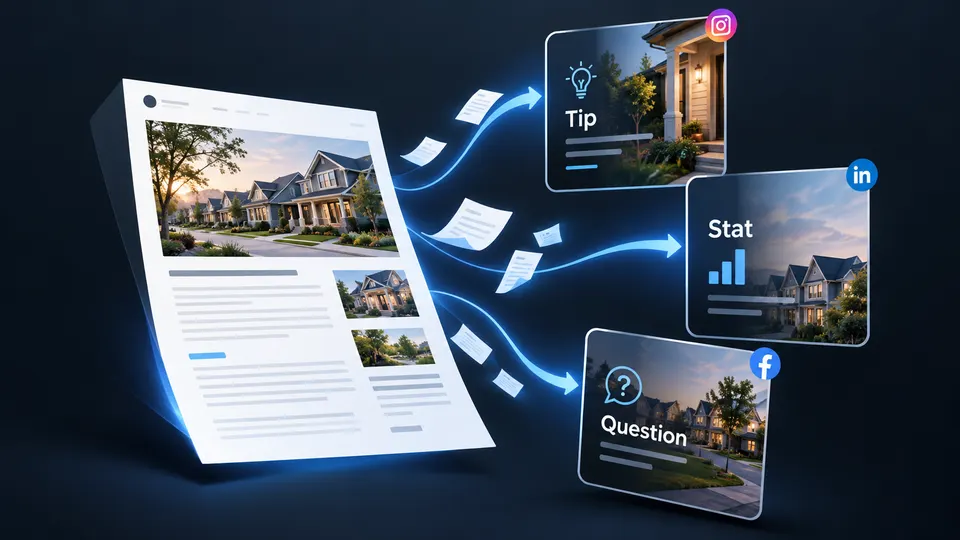
From there, you can easily repurpose that single blog into:
This is how one 30-minute blog fuels your entire online presence. And with AI, even agents who hate writing can show up like pros.
Want to take your AI strategy even further? Check out our in-depth guide on how to automate listing descriptions, lead generation, and client follow-up using ChatGPT: Supercharge Your Real Estate Business in 2025 With AI
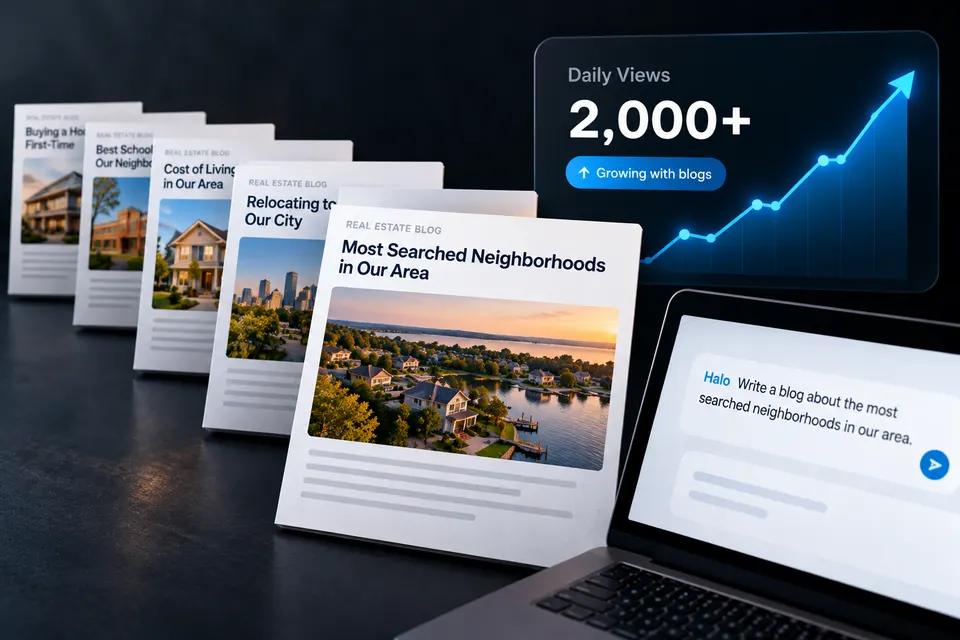
Blogging isn’t dead. It’s your best-performing digital salesperson.
One well-written blog can:
And best of all, you can now do it in 30 minutes or less.
“You can’t sell more homes if people can’t find you.” – Nick Krem
Stop trying to figure this all out alone. Join our Free Halo Live Webinar every Tuesday at 12 PM ET.
This is your chance to build smarter systems, get unstuck, and finally make AI work for your real estate business.
👉 Join the Free Halo Live Webinar
Q: What is the Triple Engine Optimization strategy?
A: It’s Nick Krem’s framework to help agents rank across all search platforms like Google (SEO), Google Answers and snippets (AEO), and AI assistants like ChatGPT (GEO). The idea is simple: when you create structured, question-based, and SEO-optimized content, you're more likely to be discovered whether someone types in a search or asks an AI.
Q: What tools help with blog keyword research?
A: Start with AnswerThePublic and AlsoAsked. These tools show you exactly what buyers and sellers are typing into search bars right now. Use these real questions to title your blog posts and craft your first few lines to directly answer them. You can also use Google’s “People Also Ask” box to brainstorm content topics.
Q: Do I need a website to start blogging?
A: Yes. Your blog needs a home. That home should be a website that lists your full name, brokerage, city, and contact information. This builds authority and trust—and it’s a major ranking factor for both Google and AI engines.
Q: Can I use AI to write my blogs?
A: 100%. In fact, you should. Use the free Triple Engine Optimized Blog Writer GPT to quickly generate question-based blog content tailored to your niche. It even writes SEO titles, meta descriptions, bullet lists, FAQs, and more. This is how top agents are scaling content while saving hours every week.
Q: How do I make sure my blog gets picked by ChatGPT or Gemini?
A: Use clear, structured formatting bullet points, subheadings, and short paragraphs. Make sure the blog answers a specific question within the first 40–60 words. Also, include links to trusted sources, use your real name, and keep your site updated. Generative engines prefer content that looks credible and is easy to scan.
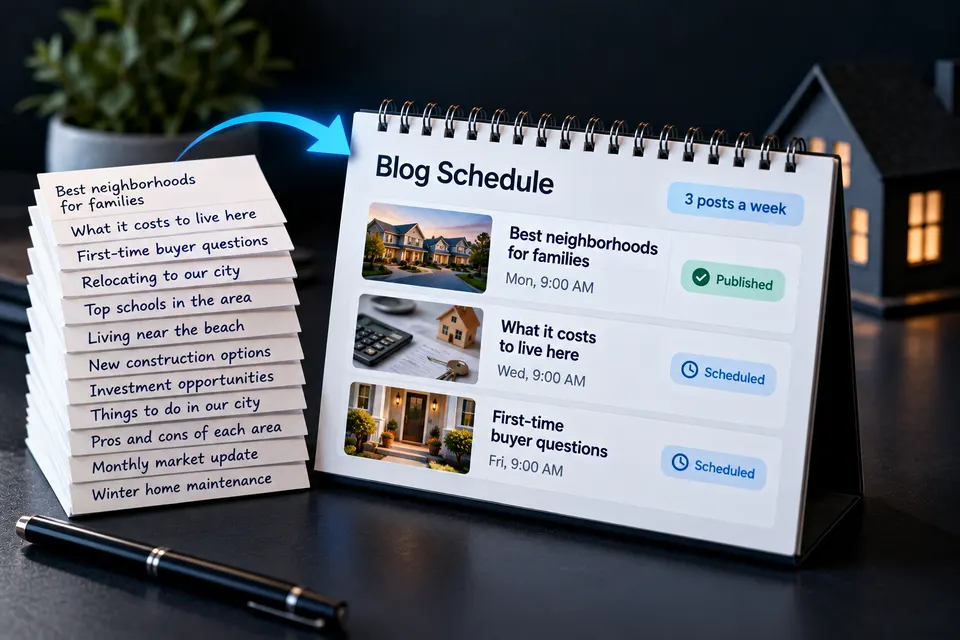
Q: How often should I blog to get results?
A: Ideally, once per week. But quality matters more than quantity. One well-optimized blog that ranks can bring in traffic for months. Start with one strong blog, then repurpose it into social media posts, email content, and videos. Over time, consistency compounds.
-w960.webp)
-w960.webp)


-w960.webp)